Why Guest Experience Is Driving Wedding Design Decisions for 2026
Luxury weddings are no longer evaluated by individual moments alone. They are remembered by how they feel as a whole.
For planner-led couples, the priority has shifted from creating standout details to shaping an environment that holds guests from arrival through the final hour. Flow matters. Transitions matter. Emotional pacing matters. Design is now expected to support those outcomes quietly and consistently.
This is why guest experience has become the central driver of wedding design for 2026. Every element is now assessed based on its contribution to the overall atmosphere rather than on its performance in isolation.
Dramatic draping fits squarely into this shift because it does something few other design elements can. It changes the way a space behaves.
Wedding Draping Trends 2026 and the Rise of Emotional Architecture
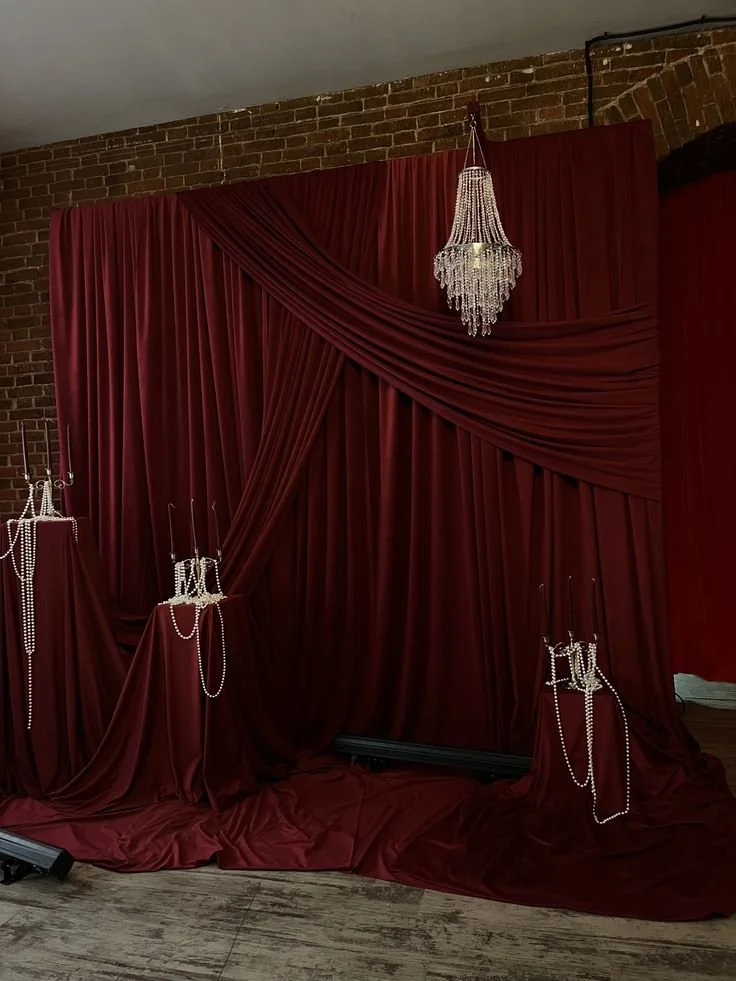
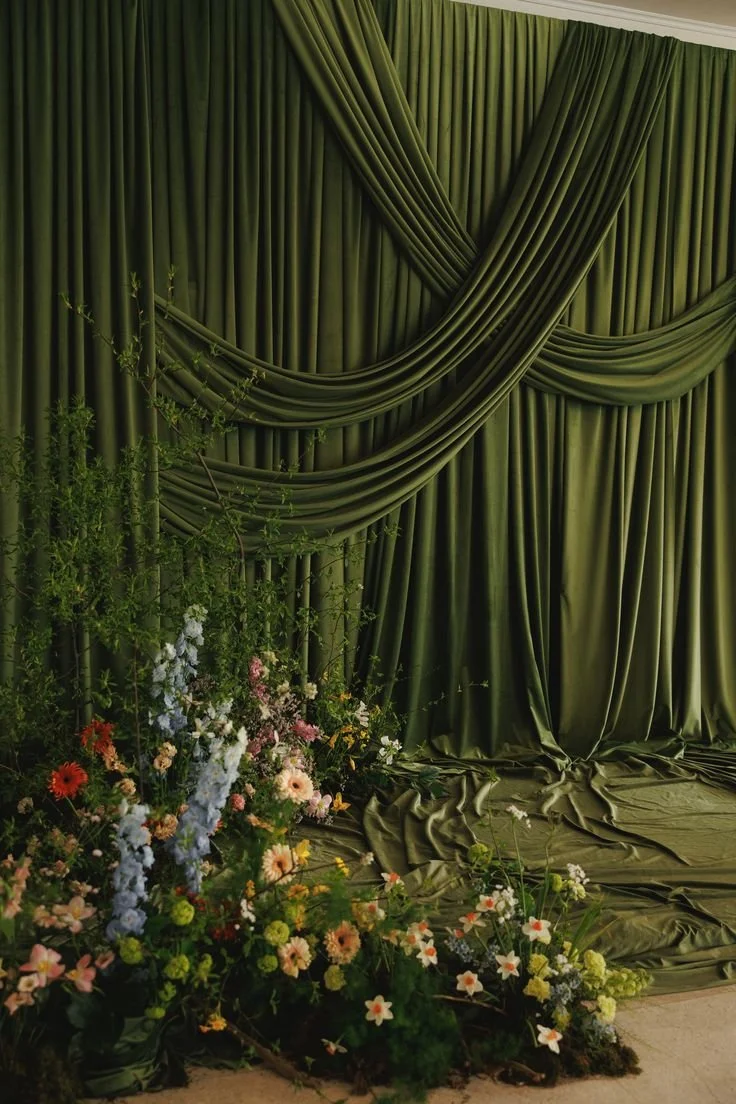
Wedding draping trends for 2026 are less about softness and more about structure. Fabric is being used to define rooms, guide movement, and influence how guests perceive scale and intimacy.
This is not decorative layering. This is emotional architecture.
When fabric is introduced intentionally, ceilings appear lower, acoustics soften, and large spaces feel grounded. Guests subconsciously register these changes even if they cannot articulate them. The room feels warmer. Calmer. More considered.
What began as a micro trend in editorial and high-profile weddings has now moved into broader planner-led design conversations. Not because it is visually striking, but because it works.
What Dramatic Draping Changes About How Guests Experience a Wedding
Draping shapes how guests interact with a space from the moment they enter.
Large rooms feel less cavernous. Conversation becomes easier. Guests linger longer because the environment feels comfortable rather than overwhelming. Movement through the space feels guided instead of scattered.
This matters deeply for weddings that span multiple hours and emotional beats. Ceremony, cocktail hour, dinner, dancing. Each phase asks something different of the room.
Fabric allows designers to subtly shift energy without changing locations or adding visual noise. It creates cohesion across moments that might otherwise feel disconnected.
Why This Matters for Photo Booths and Interactive Experiences
As draping becomes structural, it raises the standard for everything placed within the space. Photo booths included.
In fabric-led environments, anything that feels visually separate or conceptually disconnected becomes immediately obvious. Interactive experiences are no longer neutral additions. They either support the environment or disrupt it.
This is where many couples feel hesitation. Not because they doubt the value of guest interaction, but because they fear compromising the aesthetic they have invested heavily in.
That fear is valid. And it is also avoidable.
Design Drivers That Define Successful Draping and Photo Booth Integration
Planners who successfully integrate photo booths into draped weddings follow the same design logic that guides the rest of the event.
Fabric Type and How It Photographs
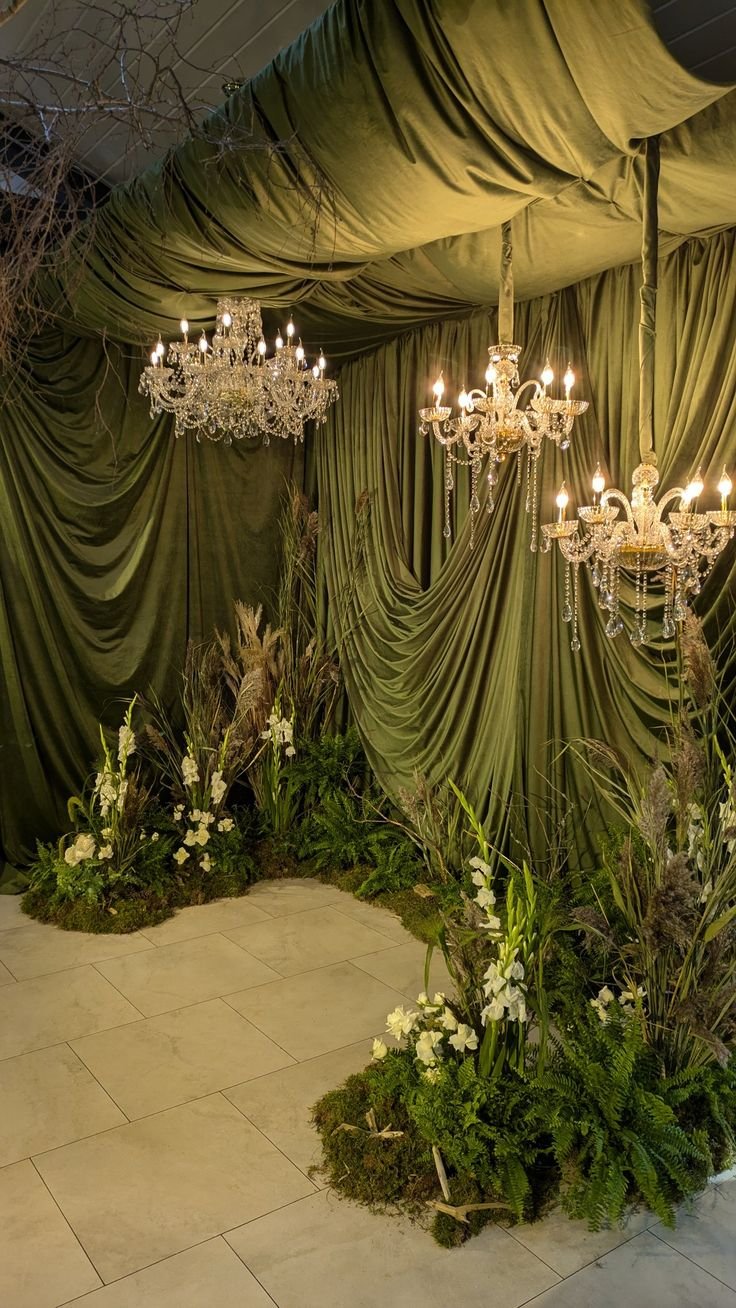
Fabric interacts directly with light. Sheer textiles diffuse. Heavier materials absorb. Both can photograph beautifully, but only when lighting and backdrop selection are intentional.
A photo booth placed against fabric selected without photographic considerations can flatten images or cast unflattering shadows. A booth designed with fabric in mind produces portraits that feel consistent with the wedding gallery as a whole.
This is not an aesthetic detail. It is a technical one.
Color Restraint and Visual Hierarchy
Draping trends for 2026 allow fabric to lead the color story. When that happens, everything else must quiet down.
Photo booth backdrops, artwork, and interfaces should support the palette, not introduce competing tones or contrast. The goal is continuity. Guests should feel like they are stepping deeper into the same environment, not into a separate experience.
Placement That Follows Guest Flow
Fabric is increasingly used to guide movement. Photo booths must follow that same logic.
Booths placed along natural pathways feel organic. Booths tucked into corners feel optional and disconnected. In 2026 weddings, separation reads as an afterthought.
Planners who treat placement as part of the spatial design create higher participation without announcements or prompting.
Where Design-Integrated Photo Booths Belong in Draped Weddings
The most successful placements anchor the booth to moments when guests already move.
Reception spaces after dinner remain ideal, especially when the booth's visual language aligns with the stage, ceiling, or surrounding drapery. Ceremony-adjacent placements work when the backdrop echoes the ceremony environment rather than introducing something new.
What no longer works is isolation. A booth that requires guests to leave the experience to participate feels dated in fabric-led weddings.
The Outdated Photo Booth Model: This Trend Leaves Behind
Dramatic draping exposes an outdated assumption about photo booths. That they are novelty-driven entertainment rather than part of the environment.
Props, loud signage, and visually dominant structures feel increasingly out of place in 2026 weddings. Not because guests do not enjoy interaction, but because these elements disrupt the event's emotional tone.
Couples are right to reject that booth design. What they often do not realize is that a different model already exists.
How Lumen Events Designs Photo Booths for Fabric-Led Weddings
At Lumen Events, we design photo booth experiences as part of the spatial plan, not additions to it.
Our studio-style setups are intentionally minimal in form, allowing fabric, lighting, and placement to do the work. Backdrops are selected to complement draping rather than compete with it. Lighting is adjusted to complement the environment rather than overpower it.
This approach allows planners to preserve the design's integrity while still offering guests an interactive experience that feels natural and refined.
The booth does not announce itself. It belongs.
Why Dramatic Draping Signals a Permanent Shift in Wedding Design
Wedding draping trends for 2026 reflect something deeper than fashion. They reflect a recalibration of priorities.
Couples are designing for memory, not moments. For how the night feels, not just how it photographs. Fabric supports that goal quietly and effectively.
Interactive experiences that respect this shift will remain relevant. Those who do not will feel increasingly out of place.
For planners and couples who care deeply about cohesion, dramatic draping is not a passing idea. It is a signal of where wedding design is headed.
At Lumen Events, we see this trend not as a challenge, but as confirmation. Guest experience and design have always been inseparable. 2026 simply makes that expectation visible.
If you are designing a wedding where guest experience and visual cohesion matter, we would love to explore how a photo booth can integrate naturally into your overall design. Inquire with Lumen Events to begin the conversation.